Kunsthalle Zürich is a not-for-profit, membership-led institution devoted to promoting contemporary art and its discourses. Its key activities are the production, presentation and mediation of contemporary art in both local and international ...
Before attending, double-check the required language skills on the organizer's website.
Caspar Heinemann: Tempting Fate
Exhibition opening: Friday 25 September 2026, 6–9 pm
Löwenbräu Season Opening: Friday 25 September 2026, 6–11 pm
In his sculptures, installations, performances, drawings, and texts, Glasgow-based artist Caspar Heinemann (b. 1994, London) casts language, narratives, and historical fragments into material and spatial forms. He often combines queer and countercultural histories with references to art that does not hail from the mainstream, architecture that is not built to professional designs, as well as spiritual and literary traditions that hold unexpected narratives and characters. Highlighting his interest in crafting and materiality, the exhibition at Kunsthalle Zürich unfolds around a new, large-scale installation in which Heinemann looks to the night sky – a recurring motif in his work to explore questions of continuity and magical thinking.
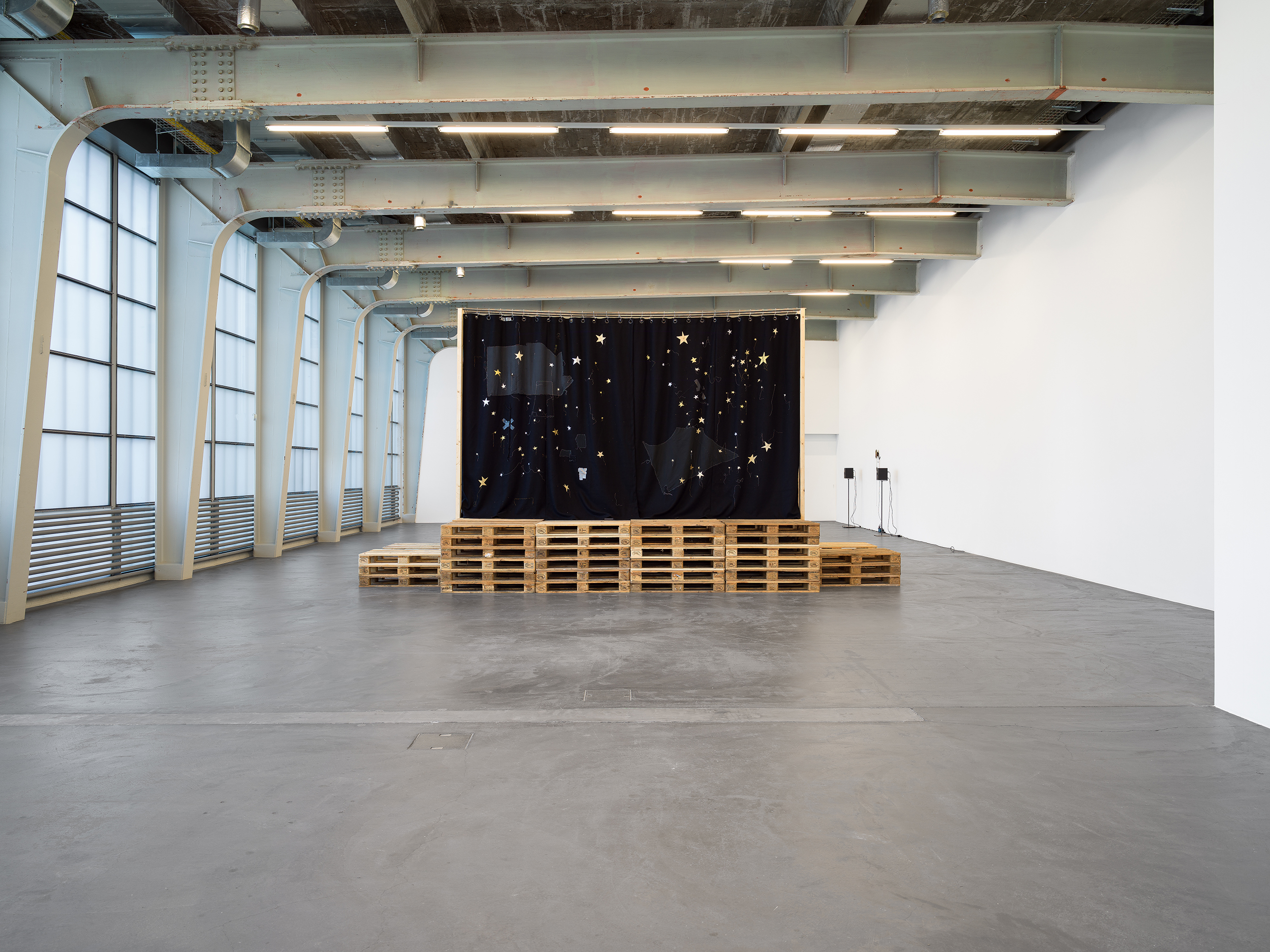
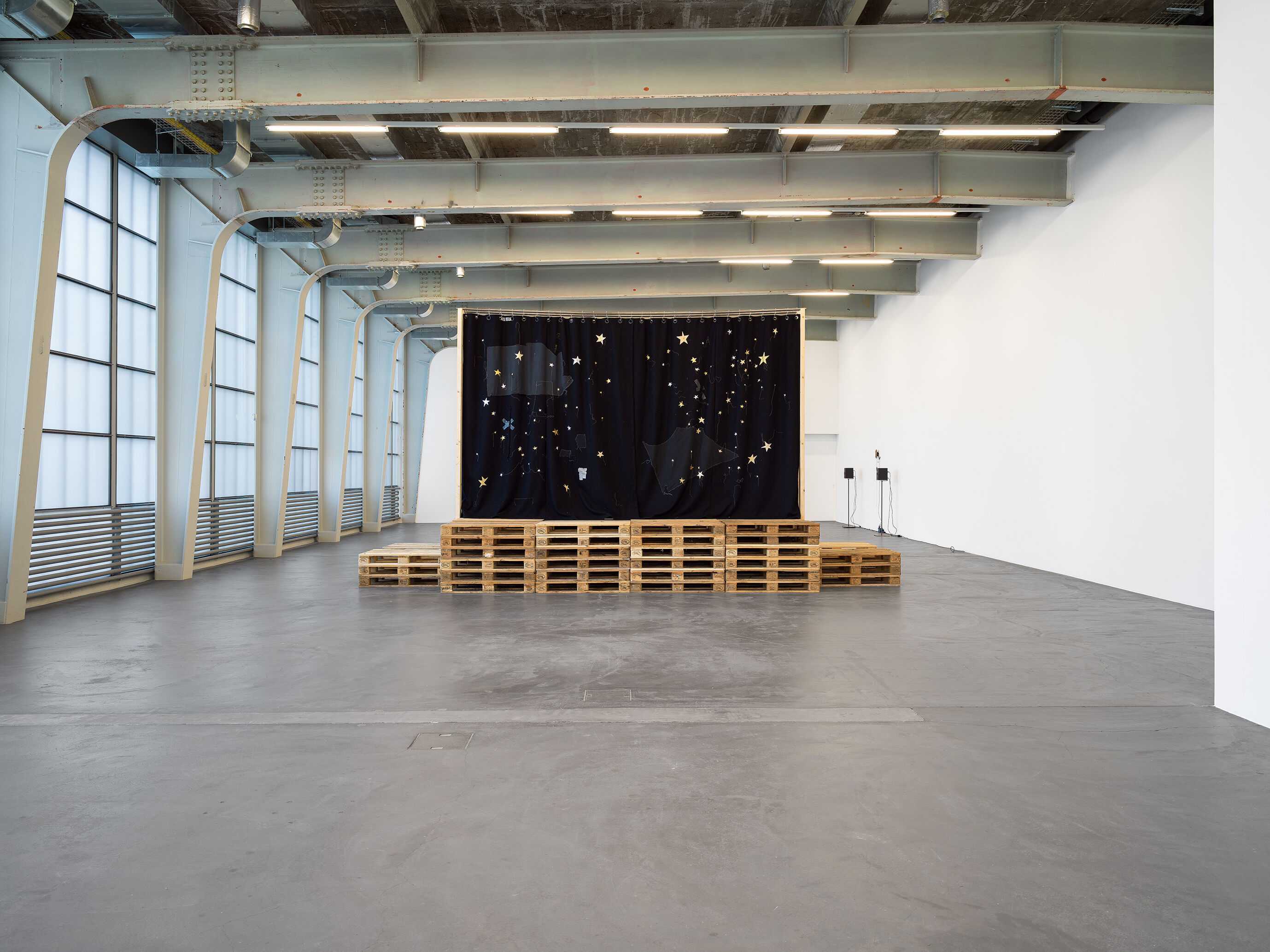
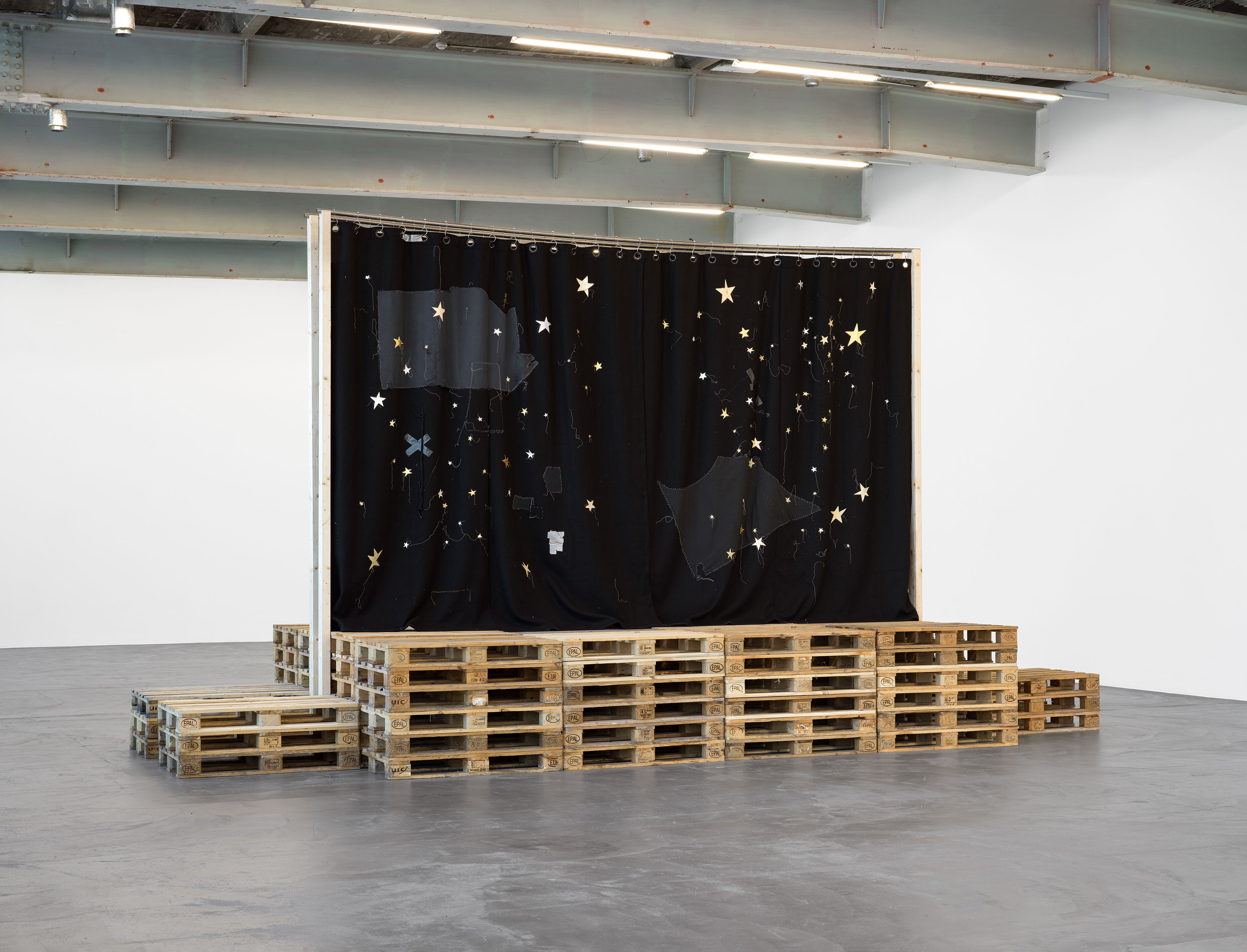
ABRACADABRA (2026), an installation developed especially for the exhibition, includes wooden pallets and a heavy noise-cancelling hand-embroidered curtain that divides the space of the Kunsthalle Zürich in two. Reminiscent of an improvised theatre setup in a school or community hall, the structure takes the form of two identical stages installed back-to-back, each with a flight of steps. There is, however, no actual front or back, nor is there the true backstage area characteristic of theatre. The separation is an illusion; the back of each stage serves as the front of the other.
Like the simple construction of wooden pallets that support it, the black curtain follows a deliberately handmade aesthetic. Sewn from a variety of fabrics and decorated with stars affixed with rough stitches, the curtains expose their threads and seams, referencing Heinemann’s experience of punk, DIY, and squatting cultures and their use of readily available materials. The processes of making, mending, and deliberately introducing patchwork is purposefully ambiguous. The night sky functions here as a concept, an allegorical device complicating the gap between the thing and its representation: while a few stars against a black ground are enough to evoke the image of a night sky, what they strive to represent ultimately eludes depiction. As a motif that is at once geographically specific and universal, the night sky becomes a surface for humans to imagine, project, and give meaning to something ultimately incomprehensible.
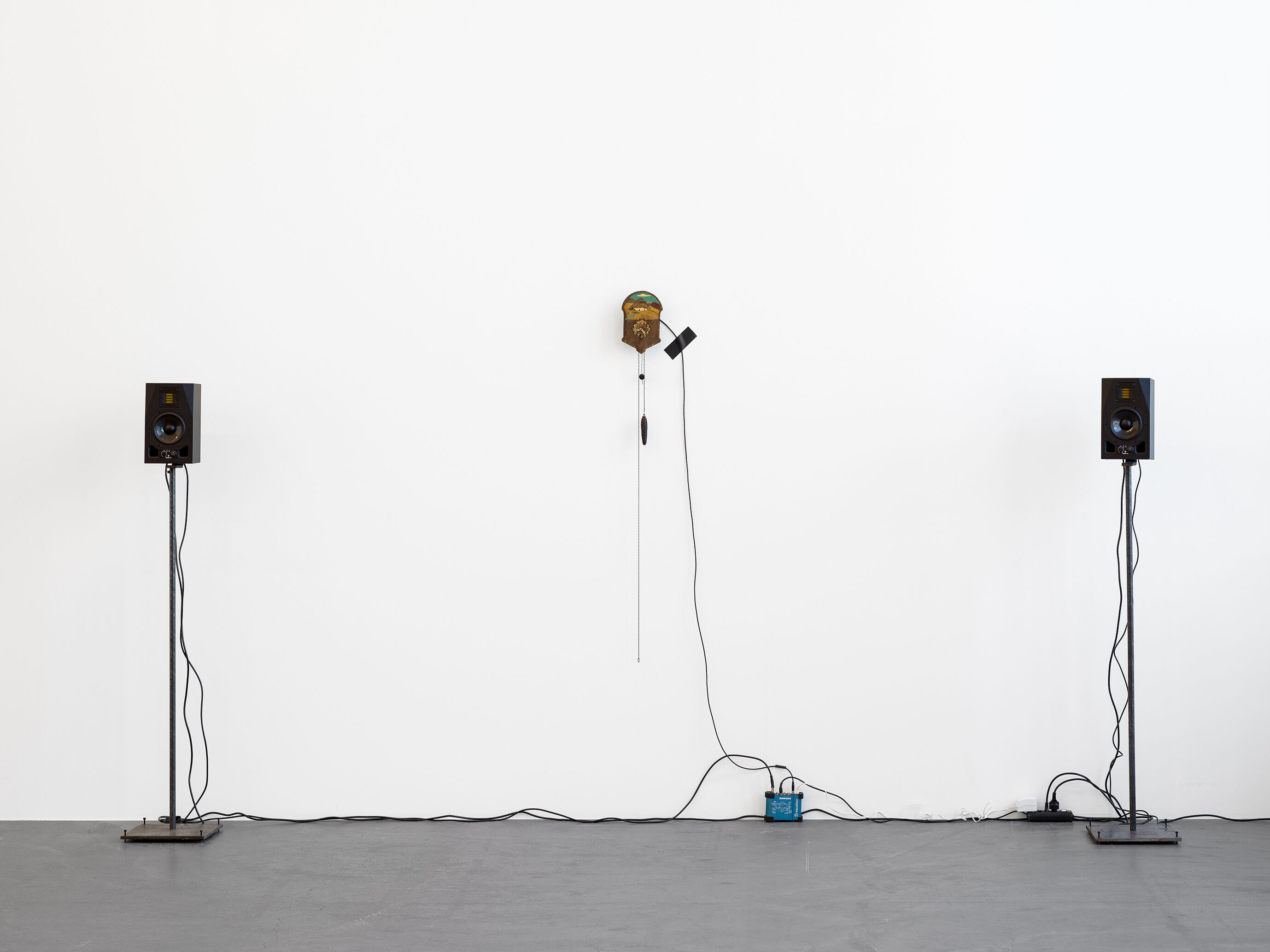
Set in dialogue with ABRACADABRA is 2x Early Post War Black Forrest Cuckoo Clocks Hand Painted Shields Restoration (2026), also created for the exhibition. Two wooden clocks from the Black Forest region were restored to working condition before having their mechanisms altered to amplify the ticking sound which fills the exhibition space. The clocks evoke the aesthetics of folk culture and traditional craft, but were mass produced for export in the period between 1947 and 1952, when pre-World War II production methods were briefly resumed. What interests Heinemann is the way in which the ‘Völkisch’ imagery associated with Nazism continued to hold mass appeal in the aftermath of the war. The clocks are contrasted with the deliberately improvised appeal of ABRACADABRA, which draws on the non-commercial techniques of hobbyists and counterculture. Heinemann is interested in the extent to which the opposing aesthetics of the two works correspond to the social and ethical ideas associated with them, and thereby the role of the imaginal in the political.
Shifts and ambiguities are also reflected in Heinemann’s use of language including the titles of his works. ABRACADABRA is a word of unclear origin used in both ritual practices and illusionist performances to bring about the transformation of matter. One common folk etymology suggests the word derives from an Aramaic or Hebrew phrase meaning ‘I create as I speak’. Through this prism the title points to the idea of accessing a different reality through language – or a spoken formula. The exhibition title „Tempting Fate” similarly plays with this idea and carries two meanings: one of a fate that is tempting (“a tempting fate”), the other referencing the English expression “to tempt fate,”: meaning to dare, challenge, even taunt it – to imagine or say something and thereby risk actually bringing it into being. In other words: careful what you wish for.
Tempting Fate, the artist’s first institutional solo exhibition outside the United Kingdom is curated by Fanny Hauser. Made possible with the support of the Georg and Josi Guggenheim Foundation.
To this organizer's website
until January 10, 2027
Kunsthalle Zürich
Limmatstrasse 270
8005 Zürich
info@kunsthallezurich.ch
Opening hours:
Öffnungszeiten während der Ausstellungen:
Montag geschlossen
Dienstag 11:00 – 18:00
Mittwoch 11:00 – 18:00
Donnerstag 11:00 – 20:00
Freitag 11:00 – 18:00
Samstag 11:00 – 18:00
Sonntag 11:00 – 18:00
Accessibility:



Infos Zugänglichkeit:
A staircase with 14 steps leads to the Löwenbräukunst main entrance (Limmatstrasse 270). The accessible entrance is at Limmatstrasse 268; all levels of the building are accessible by lift. A wheelchair accessible WC is on level 1.UG (basement).
Should you have any questions or require assistance please ring 044 272 15 15.